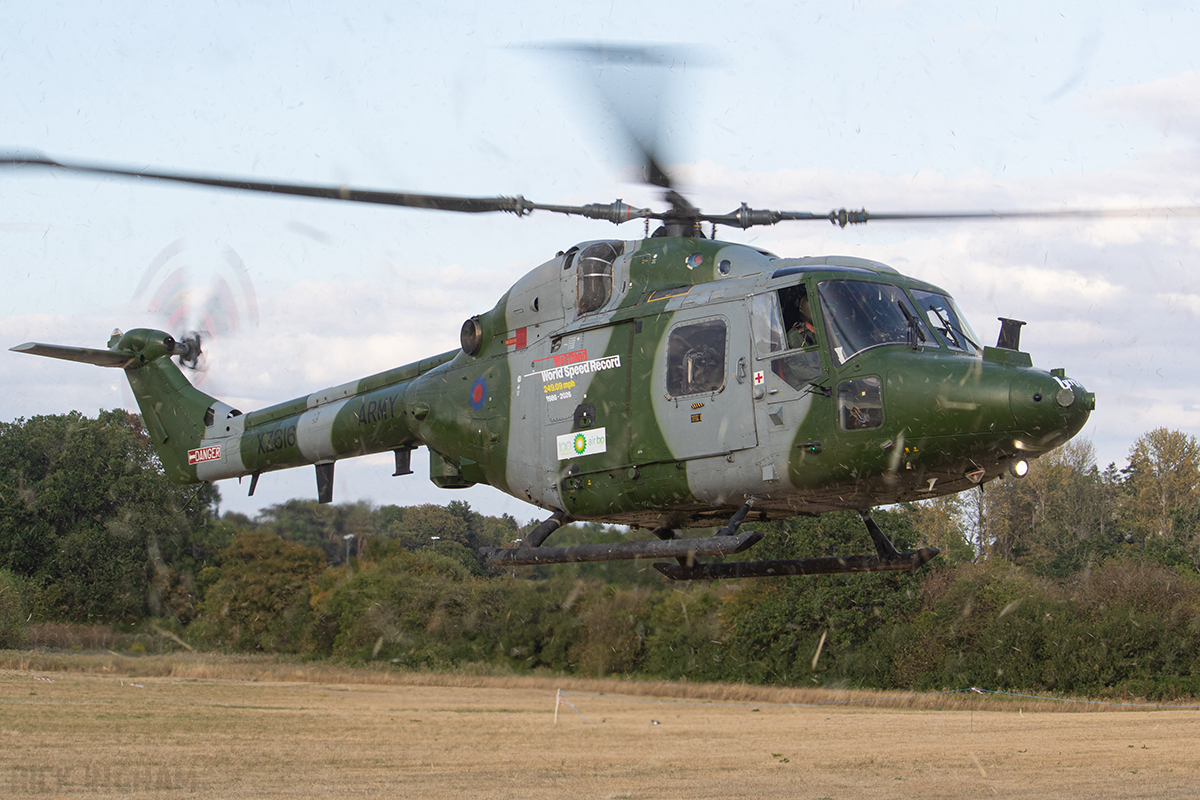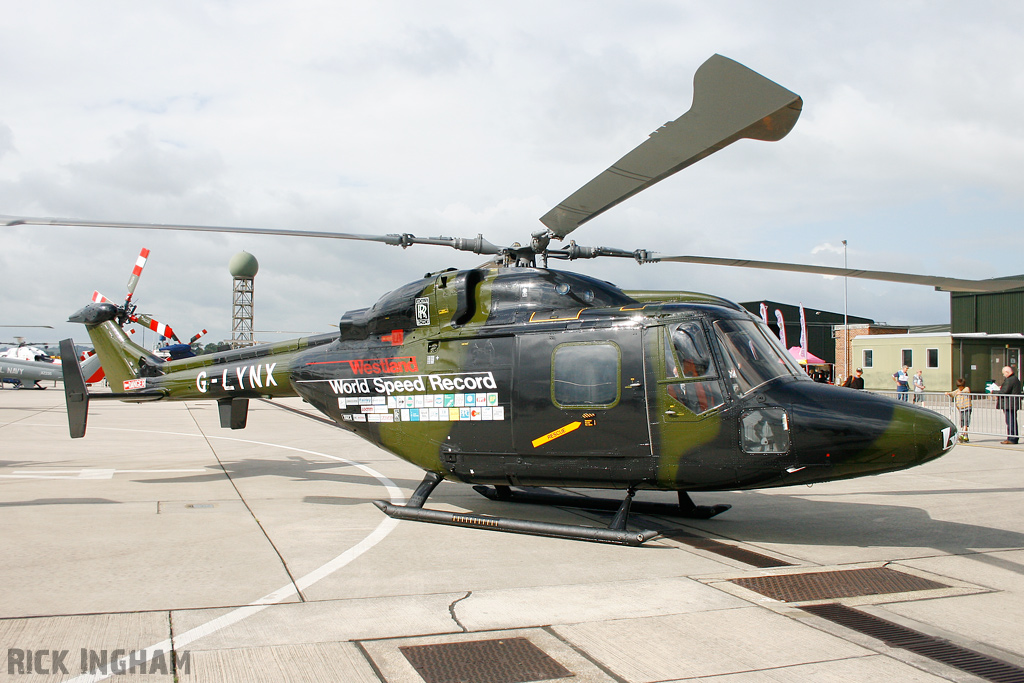
On Monday 11th August 1986, Westland Helicopters based in Yeovil, Somerset made history by smashing the world helicopter speed record using their Lynx AH1 G-LYNX. This record still stands to this day!
The crew consisting of pilot Trevor Egginton and Flight Test Engineer Derek Clews took off on the evening of 11 August 1986, flying a 15 km course across the Somerset Levels, achieving an average speed of 400.87 km/h (249.10 mph), which made it the world’s fastest helicopter and set two Fédération Aéronautique Internationale official records.
There were however previous records set, a year after Lynx's maiden flight when in 1972 Westland's Deputy Chief Test Pilot Roy Moxam broke the existing world speed record by flying at 321.74 km/h (199.9 mph) on 15 and 25 km tracks and set a new 100 km circuit afterwards, flying at 318.504 km/h (197.9 mph).
The first record set was in 1959 by an Mi-6 Hook at 268.92km/h, beaten by a HSS-2 at 294.19km/h in 1961. The French in 1963 then set 334.28km/h using a Super Frelon before an Mi-10 reached 340.15km/h and then later an Mi-24 Hind reached 368.4km/h in 1978.
The 1986 record was possible when G-LYNX was fitted with the British Experimental Rotor Programme (BERP) blades, which later went on to be fitted to future AW101 Merlin and Super Lynx helicopters. This incredible feat of engineering was recognised in 2014 when Lynx recieved The Heritage Engineering Award from The Institution of Mechanical Engineers.
Today, G-LYNX can be seen in The Helicopter Museum in Weston-super-Mare.
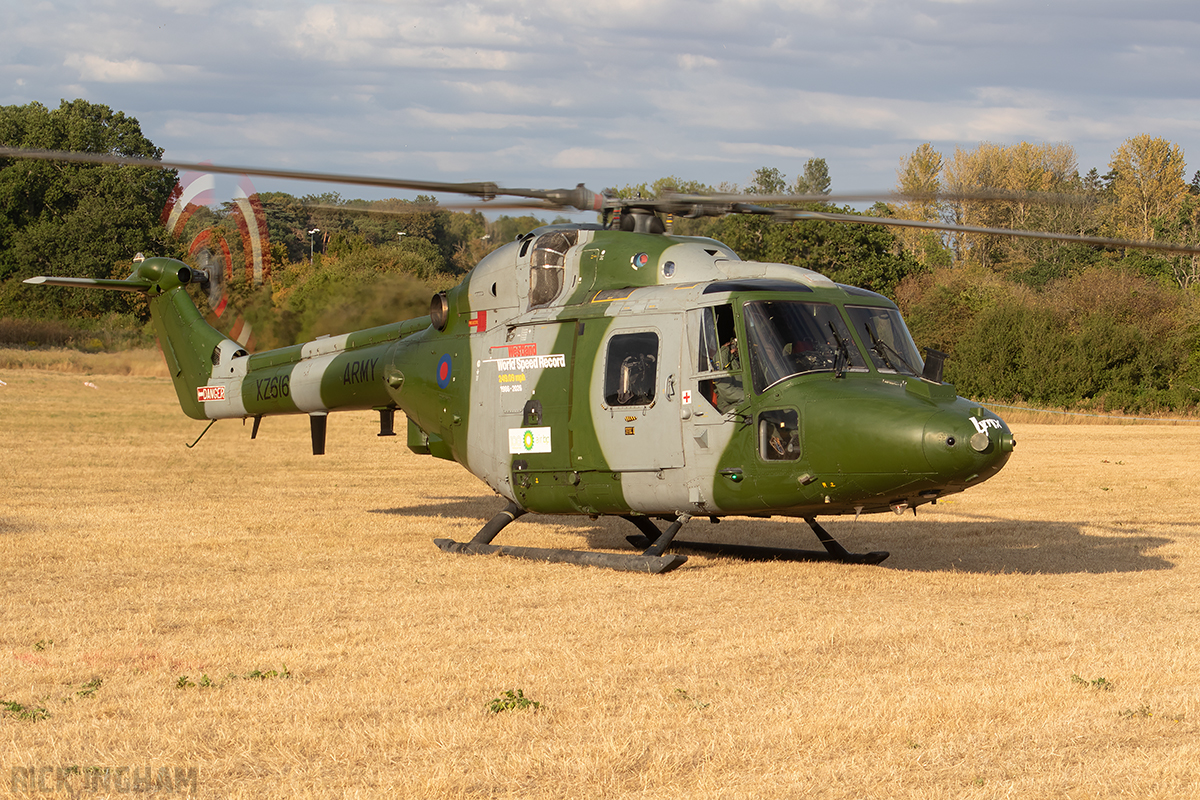
To celebrate the 40th anniversary of the 1986 record, the two sole airworthy Lynx AH7s owned privately by Historic Helicopters and Project Lynx have had World Speed Record markings applied similar to G-LYNX. Seen here lifting from the White Horse Military Show in 2026.